Best Countertop Edge Profile for a Busy Riverside Kitchen
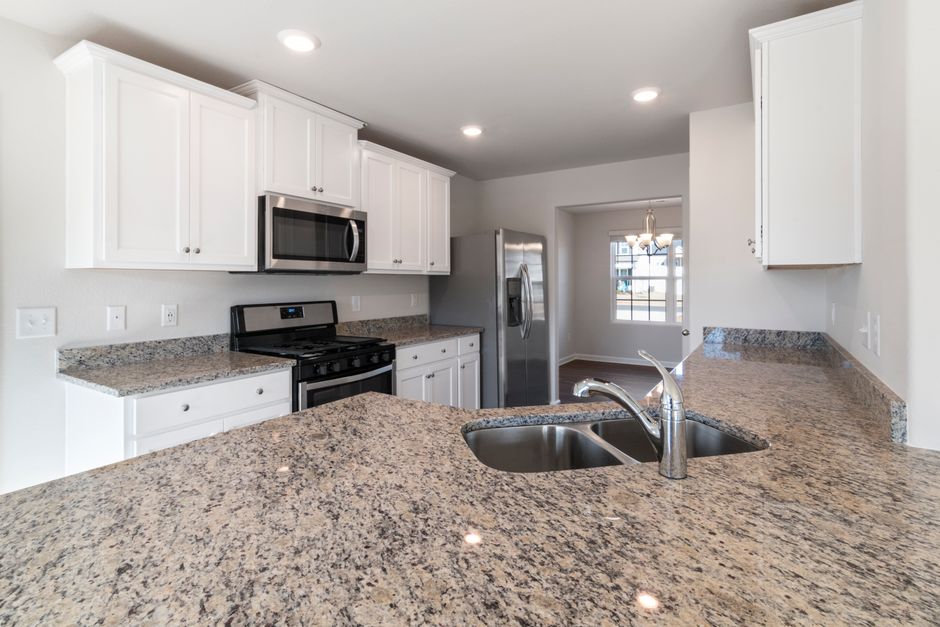
An eased edge is the best all-round profile for a busy kitchen. It is a square edge with the sharp corner lightly rounded, so it resists chipping better than a dead sharp corner, has no grooves to trap grime, and wipes clean in one pass. The other four profiles each win in a particular spot, and each has a cost in chipping, cleaning, or safety that is worth knowing before a fabricator cuts your slab.
Start With the Weakest Point: The Corner
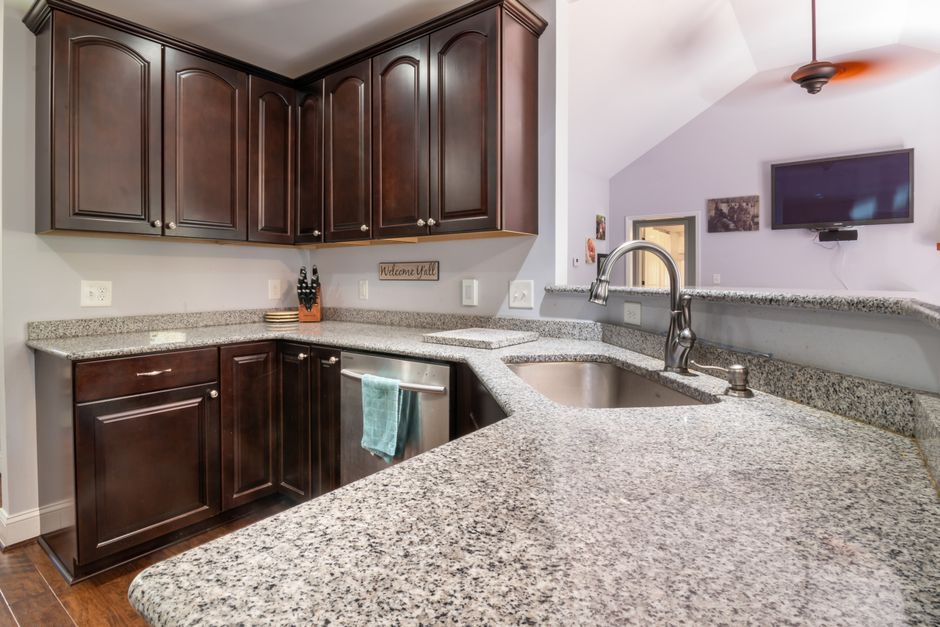
Every countertop edge chips at its corner first. A sharp 90 degree corner is the most fragile point on any slab, and a cast iron pan or a dish rack will find it quickly. So the first rule is simple: never accept a dead sharp edge. Even if you want a clean, square look, ask that every exposed corner be eased.
The edge profile is not just a style choice. It changes how often you clean, how many chip points you live with, and how forgiving the counter is when a hip, a chair back, or a stockpot meets it. In a busy kitchen, the fewer recesses and fine lips a profile has, the less cleaning and the fewer weak points you get.
Eased Edge: The Practical Default
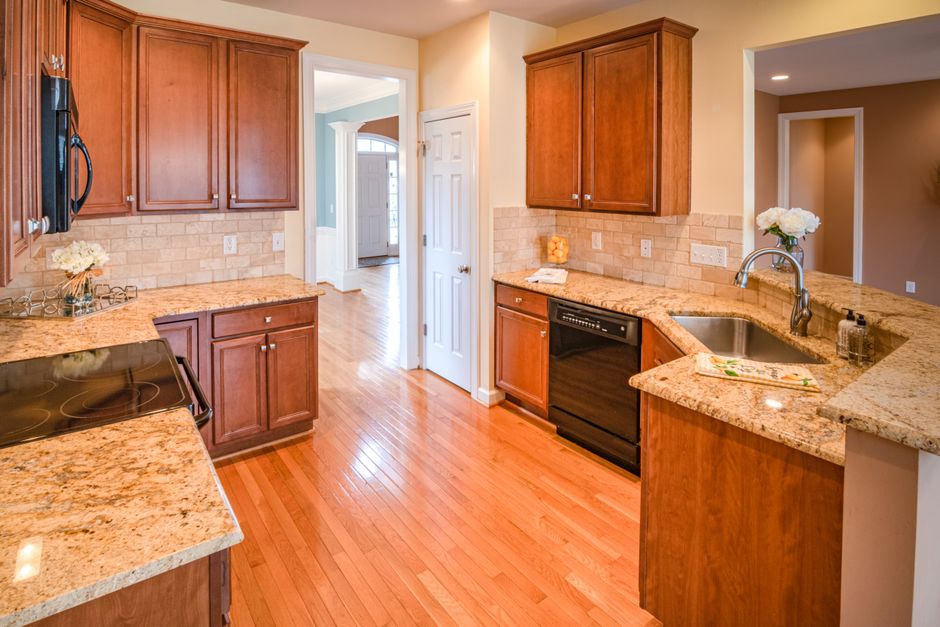
The eased edge keeps the modern square look while removing the brittle corner. It has no grooves, no seams, and no fine lips. A cloth moves along it without catching.
Its drawback is mostly visual. It is plain, and it will not give a kitchen the sculpted look of a decorative profile. For a household that cooks daily, that trade is usually worth it.
Bevel Edge: Crisp and Easy to Clean
A bevel cuts a flat angled face along the top corner. It removes the weakest point and cleans almost as easily as an eased edge. It reads as a tidy, tailored line.
The catch is that a bevel creates two lines instead of one. If a small chip does happen, it can look more obvious against that crisp geometry. A bevel works well on a main work run when you like the sharper look and are careful about heavy cookware near the edge.
Bullnose: Full and Half
A full bullnose rounds both the top and the bottom of the edge. With no hard corner to break, it is very forgiving of impacts. It is also gentle on hips and on small children at head height, which matters in a family kitchen where traffic is constant.
The tradeoff is spills. Liquid can roll over the rounded edge and under it, ending up on cabinet fronts and the floor instead of stopping at the edge. A full bullnose is not the right choice for every kitchen.
A half bullnose rounds the top and leaves the bottom flat. It keeps much of the comfort and chip resistance of the full version, and liquid tends to drip straight down rather than wrapping underneath. For many busy kitchens it is a sensible middle path.
Ogee Edge: Beautiful, but Choose Its Location
An ogee is a decorative S shaped curve. It has a recessed channel and fine lips, and those features collect crumbs, grease, and residue. The lips are also thinner points that can chip under impact.
That does not mean an ogee has no place in a kitchen. It suits a low traffic island end, a bar section, or a formal space far better than the main prep run beside the stove. If you love the look, keep it away from the cooking and cleanup zones and use a simpler profile where the work happens.
Mitered Edge: The Thick Look With a Joint
A mitered edge joins a strip of stone to the top at an angle so the counter looks like one thick slab. The result is bold and clean, and it works nicely on islands.
It is not one solid block, though. A glued joint runs along the edge, and a hard knock right at that joint can open it or chip it. Quality depends heavily on tight cuts and a well color matched adhesive. Check that the seam is narrow and evenly filled on your sample.
Many thick looking edges on thinner slabs are also built up by gluing a strip underneath. Look for the seam line on the edge face of a sample, and ask whether your edge will be solid stone or built up.
Side by Side for Everyday Use
- Eased: Best chip resistance for its simplicity, easiest to clean, safe for most uses.
- Bevel: Very easy to clean, removes the weak corner, but a chip shows more on the crisp line.
- Half bullnose: Comfortable and forgiving, with drips falling straight down.
- Full bullnose: Most forgiving of impacts and kindest to hips and children, but spills can wrap underneath.
- Ogee: Most decorative, hardest to clean, and has thin lips that can chip.
- Mitered: Strong visual weight, but the glued joint is a point to inspect and protect.
For the main work areas, eased, bevel, and half bullnose are the safest general picks.
Match the Profile to the Zone
The highest impact zones are the dishwasher run, the sink front, and the cooktop area, where heavy pans and dish racks come close to the edge. Put your most forgiving profile there and keep any decorative profile away from them.
Islands need their own thought. On an island that sits in a walkway, ask for rounded or clipped outside corners. A square outside corner at hip height is both a bruise point and a chip point. Where people sit, choose an eased or bullnose edge, because chair backs and stool frames hit the edge again and again.
Material Changes the Answer
Profile and material work together. Granite and quartzite edges generally take impacts well. Marble and other softer stones scratch and chip more easily, so choose a more rounded profile with them. Engineered quartz is tough on the surface but can still chip at the edge from a sharp blow, so it is not chip proof.
Porcelain and sintered slabs need extra care. On many of them the pattern sits mainly on the surface, and heavy profiles like ogee or bullnose can cut through to a plain body color. Fabricators commonly use eased or mitered edges on these slabs, so ask before you choose a profile.
Riverside Hard Water and the Sink Edge
Riverside tap water is hard, and mineral film and white scale build up wherever water dries on an edge. The worst spots are around the undermount sink cutout and inside any ogee groove. Wipe the sink edge dry after heavy use. A simple eased or bullnose sink edge is far easier to keep scale free than a grooved one.
Remove scale with a stone safe descaler and a pH neutral cleaner. Vinegar and acidic sprays are not safe for every stone, since acids etch marble and limestone and can dull the polish on some others. In grooved profiles, use a soft brush rather than an abrasive pad.
Natural stone edges need sealing too. The edge gets more hand oil and splash than the field of the counter. Do a water drop test on the edge as well as the top, and if the stone darkens within a few minutes, it is time to reseal. Sealing protects against staining, not chipping, so it does not make an edge harder. Engineered quartz does not need sealing.
Check the Edge at Install
Run your hand along the entire edge. It should feel consistent, with even polish, no rough spots, and a matching profile at seams and corners. If your counter has mitered or laminated joints, confirm they are tight and evenly filled before the installers leave.
If a Chip Happens Anyway
A small edge chip is usually repairable. A fabricator can typically fill it with color matched epoxy or resin and polish it back, and a chip does not mean the whole countertop must be replaced. If you find the broken fragment, save it, since a clean piece can sometimes be bonded back in place.
Habits prevent most chips:
- Lift cast iron and heavy stock pots clear of the edge.
- Never use the counter edge to pry lids or crack items.
The Short Answer for Your Kitchen
Choose an eased edge, or a half bullnose if you want extra softness, for the sink, dishwasher, and cooktop runs. Use a bevel if you prefer a sharper line. Save an ogee for a low traffic island end, and treat a mitered edge as a design choice that needs a close look at its joint. Pair the profile with your material, and ask to see an edge sample in the actual slab before anything is cut.